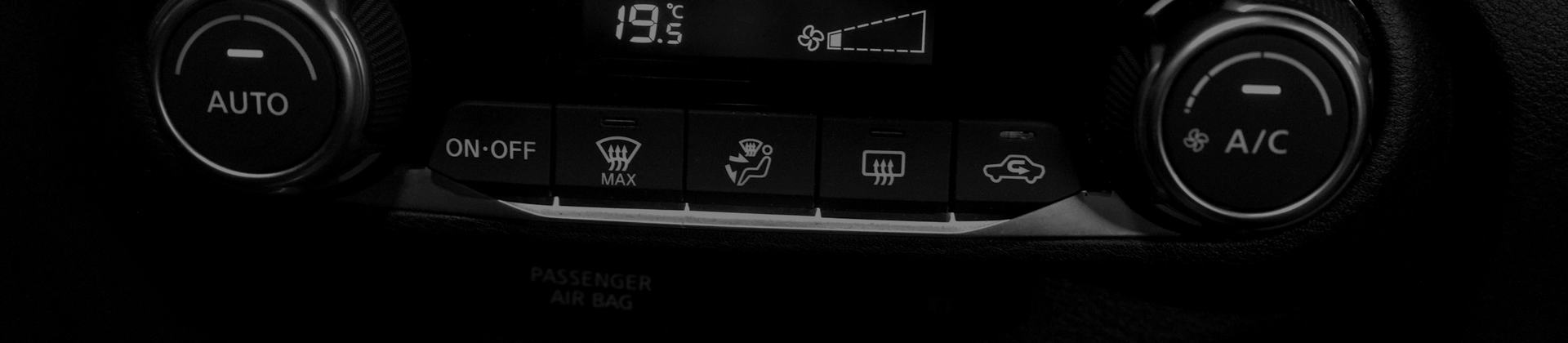

Warm air from the vents, a heater that never gets going or a musty smell each have a handful of usual causes, and the fix ranges from a filter to a compressor. This page explains what the shop checks and which questions to raise before you approve the work.
The air conditioning and the heater share the same vents, fan and controls, but they get their cold and their warmth from different places. The air conditioning runs on a sealed loop of refrigerant pushed round by a compressor, while the heater borrows hot coolant from the engine.
The usual surprise on a climate repair is paying for a recharge that fades within the season. Refrigerant does not get used up, so a system that is low has a leak somewhere. Knowing that before you visit changes the questions you put to the shop.
What you might notice
- Air from the vents that feels cool but never cold
- Cold air on the highway that turns warm at a light
- A musty or damp smell when the fan first comes on
- A sweet smell inside the car or a greasy film on the glass
- A heater that stays lukewarm long after the engine has warmed
- A click, squeal or rattle when the air conditioning switches on
How the system works and wears
The compressor, turned by the engine's belt, squeezes refrigerant and sends it to a condenser behind the grille, where it sheds heat. The refrigerant then expands inside a small radiator behind the dashboard, chilling the air the blower pushes through the vents. Seals, hoses and the condenser itself can crack with age and let refrigerant escape.
The heater uses a heater core, another small radiator behind the dashboard, filled with hot coolant from the engine. Doors inside the dashboard, moved by small motors, blend hot and cold air and send it to the face vents, the floor or the windshield. A cabin air filter cleans the air before it reaches you.
- The compressor and condenser handle the cooling side
- The heater core runs on hot engine coolant
- Blend doors steer air to each vent
What the shop checks on a climate job
For weak cooling, the shop connects gauges to read the pressures on both sides of the system and measures how cold the air is at the vents. If the readings show the system is low, the next step is finding the leak, with a dye added to the refrigerant or an electronic detector that sniffs for it.
For heater trouble, the shop checks the coolant level and looks for trapped air, a stuck thermostat or a blocked heater core. If air comes from the wrong vent or will not change temperature, it tests the blend door motors. A smell from the vents sends it to the cabin air filter and the drain under the dashboard first.
- Pressure readings before any refrigerant goes in
- A dye or detector test to find the leak
- Coolant level and thermostat for heater complaints
What drives the cost
A recharge on its own costs less up front, but you pay for it again if the leak stays. The bill grows with where the leak sits: a valve or a seal is a small part, while an evaporator buried behind the dashboard can take a long day of labor to reach.
Compressors come new or remanufactured, and carmakers often call for a new drier and expansion valve at the same time, plus a flush if the old compressor shed debris. Newer cars use a refrigerant that costs more per fill, which the estimate should show as its own line item.
- Where the leak sits and how deep it is
- Drier, valve and flush alongside a compressor
- Refrigerant type shown as its own line item
What to book and what to have looked at soon
Weak air conditioning, a musty smell or a lukewarm heater on a mild day can usually go into an appointment that suits you. Try to book before the hot or cold season, when climate work queues up. The mechanic who has checked the car is the one to say how long it can go.
Defrost that will not clear the windshield is a visibility problem, so get it checked soon and do not set off until the glass is clear. A sweet smell inside the car, a film on the glass or a temperature gauge climbing while the heater blows cold means stop somewhere safe and have it checked before you drive on.
- Weak cooling: book it before the hot season
- Poor defrost: get it checked soon
- Coolant smell or a rising gauge: stop safely
Questions to ask the shop
- What were the pressure readings, and do they show a leak?
- Where is the leak, and how much labor does reaching it take?
- Does the estimate include the drier, valve and flush the carmaker calls for?
- Is the replacement compressor new or remanufactured, and what warranty does it carry?
- Have you checked the cabin air filter and the dashboard drain for the smell?
Between visits
- Run the air conditioning briefly now and then, even in winter
- Change the cabin air filter on the schedule in your manual
- Keep leaves and debris clear of the grille and the cowl
- Note whether warm air comes at idle, at speed or always
- Watch the temperature gauge whenever the heater stops blowing hot
Questions about heating and air
A recharge refills the refrigerant but does nothing about the leak that let it out, so the cooling fades again. It can make sense as a step in finding the leak, with dye added. Ask the shop whether the recharge is the repair itself or part of the test.
Moisture collects on the cold parts behind the dashboard, and a blocked drain or an old cabin air filter lets mildew grow there. A new filter and a cleaning treatment often help. If the smell is sweet rather than musty, tell the shop, because that points somewhere else.
Yes. The heater warms the air with coolant from the engine, so low coolant, a stuck thermostat or trapped air shows up as weak heat. That is why a heater complaint can be an early sign of a cooling problem, and why the shop looks at both.